 Mixmonde
Play free
Expressions & Patterns: 5th grade math in Himalayas
Order of operations, writing expressions, and numerical patterns.
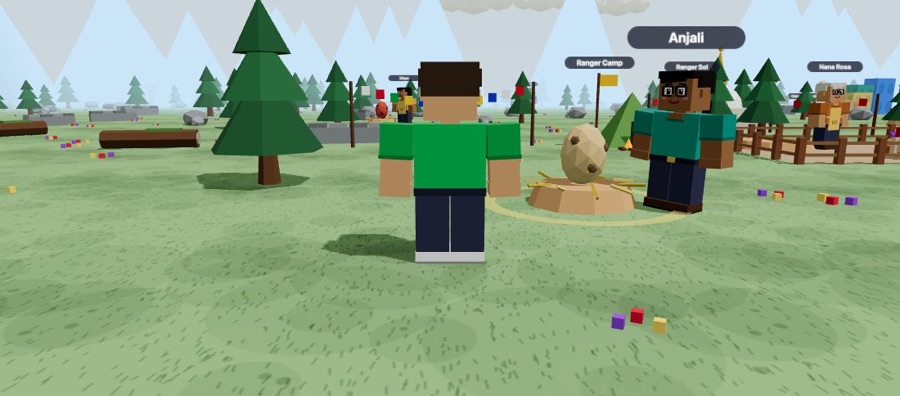
Climb to the roof of the world, where yaks graze below the highest peaks on Earth. Characters here greet you with “Namaste!” (hello in Nepali), and eggs hatch into hybrids of animals like snow leopard, bharal (blue sheep), red panda and Asiatic black bear.
What your child practices
Follows Operations & Algebraic Thinking (5.OA).
Order of Operations
Brackets first, then × and ÷, then + and −, left to right.
5.OA.A.1
Writing Expressions
Turn words into expressions with brackets and compare them without calculating.
5.OA.A.2
Multi-Step Word Problems
Solve story problems that need two or more steps, and check that answers make sense.
5.OA.A.2, 4.OA.A.3
Numerical Patterns
Compare two number patterns made from two rules, and graph their matching numbers as points.
5.OA.B.3
Try a problem from Himalayas
Every problem is a short story set in the world. These are real problems from the game. Kids get endless new ones with different numbers.
A Sherpa guide scratches 31 − 4 × 2 in the snow.
"Solve it before we cross the rope bridge," she says.
What is the value of 31 − 4 × 2?
Show the answer
23
- Multiply first: 4 × 2 = 8.
- Then subtract: 31 − 8 = 23.
A yak carries 6 sacks of hatchling feed. Each one weighs 7 kg.
It also carries a warm egg basket that weighs 11 kg.
Which expression shows the total weight the yak carries?
Show the answer
6 × 7 + 11
- The 6 loads weigh 6 × 7 kg.
- Add the extra: + 11.
- Multiplying comes first, so no brackets are needed: 6 × 7 + 11.
A young monk folds 28 paper prayer flags.
An older monk folds 6 times as many.
How many flags do the two monks fold together?
Show the answer
196
- The older monk: 6 × 28 = 168.
- Together: 28 + 168 = 196.
Common mistakes, and how to help
Every wrong answer in Mixmonde is planned: it points to a named mistake, and the tip after a miss explains it with that problem’s numbers. These are the mistakes this world watches for, grouped the way the grown-ups’ dashboard shows them.
-
Expressions and equations
Order of operations, unknowns and the equals sign: reading “=” as “the answer comes next” instead of “both sides balance”.
Mistakes we catch: worked strictly left to right, ignored the brackets, added before subtracting, multiplied before dividing, missing brackets and brackets in the wrong place.
Try at home: Write “mystery number” riddles for each other (“I double it and add 3, I get 17”). Solve by undoing the steps, last one first.
-
Choosing the operation
The arithmetic is fine, but the wrong operation was picked: adding when the story takes away, or multiplying when it shares out.
Mistakes we catch: wrong operation, times as large vs more and times as many read as more.
Try at home: Have them say the plan in words first (“share 48 into groups of 6, so divide”). Swap in easy numbers to see which operation makes sense, then use the real ones.
-
Order and direction
The right idea done the wrong way round: taking the smaller digit from the bigger one, dividing backwards, swapping x and y, or flipping more and less.
Mistakes we catch: numbers in the wrong order, reversed the comparison, steps in the wrong order, mixed up the patterns and swapped x and y.
Try at home: For ratios and coordinates, write labels on the numbers (“birds : eggs”, “across, then up”) and check the order matches the question.
-
Reading the question
The math works, but the answer is to a different question: a number already given, a halfway step, or only part of a two-step problem.
Mistakes we catch: stopped after one step.
Try at home: Underline what the question asks for and list the steps (“first find …, then …”). Tick each step off before giving the answer.
-
Place value
The digits are right but their places are not: a 3 in the tens is worth 30, not 3. This shows up when carrying, borrowing, lining up numbers or placing a decimal point.
Mistakes we catch: did not check the size.
Try at home: Use a place-value chart that goes past the decimal point (tenths, hundredths). Multiply and divide a number by 10 and 100 by sliding the digits along the chart, never by “adding a zero”.
-
Counting and sequences
Losing track while counting: off by one, skipping or double-counting, or counting the wrong things (fence posts instead of gaps).
Mistakes we catch: looked for "more" instead of "times", went one step too far and off by one term.
Try at home: For patterns and sequences, write the first few terms in a table and say what changes each step before jumping to the 20th term.
Ready to hatch the first egg? A grown-up creates the account in a minute, then it’s off to the first world. Kindergarten and Grade 1 are free. The other grades come with a membership.
Create a free accountMore Grade 5 worlds: Place Value & Decimals · Fractions · Measurement & Data · Geometry · Ratio, Rate & Percent