 Mixmonde
Play free
Fractions, Decimals & Factors: 6th grade math in The Swiss Alps
Dividing fractions, long division, decimal operations, GCF, LCM and the distributive property.
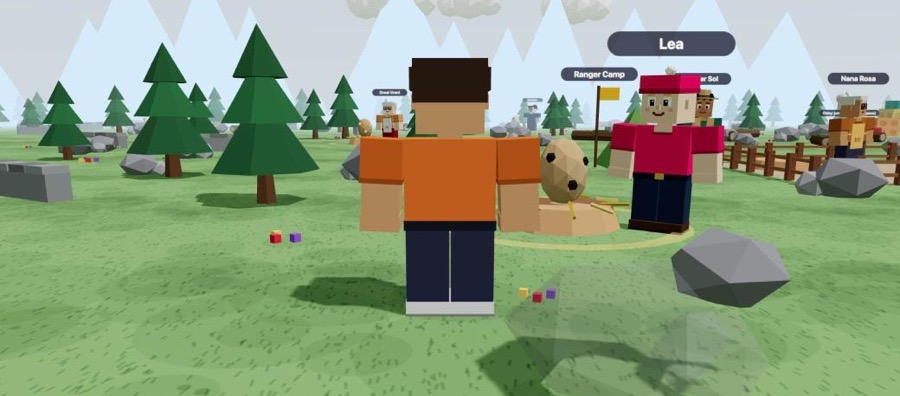
Ride a cable car over flowery meadows, ringing cowbells and glittering glaciers in the heart of Europe. Characters here greet you with “Grüezi!” (hello in Swiss German), and eggs hatch into hybrids of animals like Alpine ibex, chamois, Alpine marmot and red deer.
What your child practices
Follows The Number System — operations and factors (6.NS.A–B).
Dividing fractions by fractions
How many 3/8-kg molds does 3 kg of chocolate fill? 3 ÷ 3/8 = 3 × 8/3 = 8.
6.NS.A.1
Fraction division word problems
If 3/4 km of track takes 1/6 of an hour, the cogwheel train climbs 3/4 ÷ 1/6 = 4 1/2 km in an hour.
6.NS.A.1
Dividing multi-digit numbers
Long division with two-digit divisors: 7,344 chocolates in boxes of 24 fill 306 boxes.
6.NS.B.2
Adding, subtracting, multiplying and dividing decimals
Fence a 7.25 m by 5.5 m pen, or count how many 0.75 m planks span a 9 m stream.
6.NS.B.3
Greatest common factor
24 milk and 36 dark chocolates make at most 12 matching gift boxes: 12 is the greatest common factor.
6.NS.B.4
Least common multiple
Cable cars every 6 minutes and trains every 8 minutes leave together again after 24 minutes.
6.NS.B.4
Factoring out a common factor
Use the greatest common factor to write 36 + 48 as 12 × (3 + 4).
6.NS.B.4
Try a problem from The Swiss Alps
Every problem is a short story set in the world. These are real problems from the game. Kids get endless new ones with different numbers.
Your incubator has 4 1/2 hours of battery left.
Each warming round for your alpine egg uses 3/7 of an hour.
How many warming rounds can the incubator run?
Show the answer
10 1/2
- Write 4 1/2 as an improper fraction: 9/2.
- Dividing by 3/7 is the same as multiplying by its reciprocal, 7/3.
- 9/2 × 7/3 = 63/6 = 10 1/2.
- Check: 10 1/2 × 3/7 = 4 1/2.
The warm floor of your incubator is a rectangle with an area of 2/15 square meters.
It is 2/5 m wide.
How long is the incubator floor in meters?
Show the answer
1/3
- Area = length × width, so length = area ÷ width.
- 2/15 ÷ 2/5 = 2/15 × 5/2 = 1/3.
- Check: 1/3 × 2/5 = 2/15.
Explorers collected 13,500 Sparks solving problems at 45 riddle stones in the Alps.
Each stone gave the same number of Sparks.
How many Sparks did each stone give?
Show the answer
300
- Divide 13,500 by 45 one place at a time, from the left.
- Each time 45 doesn’t go into the part you are on, write 0 in the quotient and bring down the next digit.
- 13,500 ÷ 45 = 300. Check: 45 × 300 = 13,500.
Common mistakes, and how to help
Every wrong answer in Mixmonde is planned: it points to a named mistake, and the tip after a miss explains it with that problem’s numbers. These are the mistakes this world watches for, grouped the way the grown-ups’ dashboard shows them.
-
Choosing the operation
The arithmetic is fine, but the wrong operation was picked: adding when the story takes away, or multiplying when it shares out.
Mistakes we catch: multiplied instead of dividing.
Try at home: Have them say the plan in words first (“share 48 into groups of 6, so divide”). Swap in easy numbers to see which operation makes sense, then use the real ones.
-
Order and direction
The right idea done the wrong way round: taking the smaller digit from the bigger one, dividing backwards, swapping x and y, or flipping more and less.
Mistakes we catch: divided the wrong way.
Try at home: For ratios and coordinates, write labels on the numbers (“birds : eggs”, “across, then up”) and check the order matches the question.
-
Reading the question
The math works, but the answer is to a different question: a number already given, a halfway step, or only part of a two-step problem.
Mistakes we catch: counted the unfinished piece, gave the exact quotient instead of complete pieces, forgot the leftover group, counted a group that isn’t full, gave the remainder as the answer and gave how many go in each group.
Try at home: Underline what the question asks for and list the steps (“first find …, then …”). Tick each step off before giving the answer.
-
Place value
The digits are right but their places are not: a 3 in the tens is worth 30, not 3. This shows up when carrying, borrowing, lining up numbers or placing a decimal point.
Mistakes we catch: left a zero out of the quotient, put the decimal point in the wrong place and lined up the last digits instead of the decimal points.
Try at home: Use a place-value chart that goes past the decimal point (tenths, hundredths). Multiply and divide a number by 10 and 100 by sliding the digits along the chart, never by “adding a zero”.
-
Units and measuring
The number is fine but the unit is off: a missing conversion (cm and m), the ruler not started at zero, or area mixed up with perimeter.
Mistakes we catch: added only two sides, mixed up area and perimeter and missed a side.
Try at home: Before converting, ask whether the answer should be a bigger or smaller number. Fill a box with cubes to feel why volume uses cubic units.
-
Expressions and equations
Order of operations, unknowns and the equals sign: reading “=” as “the answer comes next” instead of “both sides balance”.
Mistakes we catch: found a common factor, but not the greatest, mixed up factors and multiples, multiplied the two numbers, found a common multiple, but not the least, added the two numbers, gave the numbers inside the brackets, subtracted the factor instead of dividing, copied the number into the brackets and multiplied only the first number in the brackets.
Try at home: Write “mystery number” riddles for each other (“I double it and add 3, I get 17”). Solve by undoing the steps, last one first.
Ready to hatch the first egg? A grown-up creates the account in a minute, then it’s off to the first world. Kindergarten and Grade 1 are free. The other grades come with a membership.
Create a free accountMore Grade 6 worlds: Ratios, Rates & Percent · Negative Numbers & Coordinates · Expressions & Equations · Area, Volume & Circles · Statistics