 Mixmonde
Play free
Measurement & Data: 4th grade math in Alaska and the Yukon
Units, the 24-hour clock, money, area and perimeter, tables and line graphs.
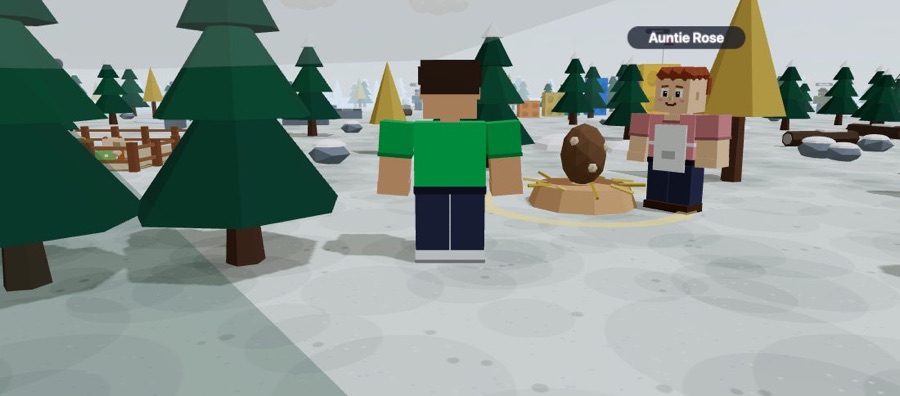
Follow the salmon up the Yukon River, under Denali and the dancing northern lights. Characters here greet you with “Waqaa!” (hello in Central Yup’ik), and eggs hatch into hybrids of animals like moose, caribou, grizzly bear and black bear.
What your child practices
Follows Measurement & Data (4.MD).
Converting Units
Change km to m, kg to g, ℓ to mℓ, hours to minutes and minutes to seconds.
4.MD.A.1
The 24-Hour Clock
Read 24-hour times, find how long things take, and change minutes to seconds.
4.MD.A.2
Money
Multiply, divide, add and subtract dollars and cents to solve shopping problems.
4.MD.A.2
Measurement Word Problems
Solve problems with distances, liquid volumes, masses and time.
4.MD.A.2
Area and Perimeter
Use area and perimeter to find a missing side of a rectangle or square.
4.MD.A.3
Area of Composite Figures
Split shapes into rectangles and squares to find their area.
4.MD.A.3
Line Plots with Fractions
Read line plots in halves, fourths and eighths, then add and subtract.
4.MD.B.4
Tables
Complete, read and solve problems with tables.
4.MD.A.2
Line Graphs
Read line graphs and find increases, the biggest change and differences.
5.G.A.2
Try a problem from Alaska and the Yukon
Every problem is a short story set in the world. These are real problems from the game. Kids get endless new ones with different numbers.
Mattie's sled dogs ran 6 km on the snowy trail today.
How many meters is that?
Show the answer
6000 m
- 1 km = 1,000 m.
- Bigger unit to smaller unit: multiply.
- 6 × 1,000 = 6,000 m.
Dr. Hana started watching the northern lights at 11:35 and stopped at 13:15.
How many minutes did that take?
Show the answer
100 min
- From 11:35 to 12:00 is 25 minutes.
- From 12:00 to 13:00 is 60 minutes.
- From 13:00 to 13:15 is 15 minutes.
- Total: 100 minutes.
Gus pays $57.00 for 6 same-size bags of hatchling food.
How much is one share in dollars?
Show the answer
9.50
- $57.00 = 5,700 cents.
- 5,700 ÷ 6 = 950 cents.
- 950 cents = $9.50.
Common mistakes, and how to help
Every wrong answer in Mixmonde is planned: it points to a named mistake, and the tip after a miss explains it with that problem’s numbers. These are the mistakes this world watches for, grouped the way the grown-ups’ dashboard shows them.
-
Units and measuring
The number is fine but the unit is off: a missing conversion (cm and m), the ruler not started at zero, or area mixed up with perimeter.
Mistakes we catch: divided instead of multiplied, wrong conversion number, joined the numbers, left out the extra part, wrong conversion, mixed up area and perimeter, counted only two sides, left out a side, forgot to halve, used one part only, added side lengths and path on one side only.
Try at home: Measure the same table in cm and in m. Walk around a rug for perimeter, then cover it with sheets of paper for area.
-
Time and money
Reading the clock or counting money: hour and minute hands mixed up, treating an hour as 100 minutes, or coin values.
Mistakes we catch: mixed up morning and afternoon, added or took away 10, not 12, forgot an hour is 60 minutes and left out the extra minutes.
Try at home: Plan a day out: how long from 10:45 to 1:15? Count on to the next hour first. Let them pay and count the change at a shop.
-
Choosing the operation
The arithmetic is fine, but the wrong operation was picked: adding when the story takes away, or multiplying when it shares out.
Mistakes we catch: added instead of multiplied, multiplied instead of divided, wrong operation, subtracted instead of divided, added the missing piece and added instead of subtracted.
Try at home: Read a word problem together and draw it as a quick picture or bar before choosing + − × ÷. Ask “is the answer bigger or smaller than the numbers we started with?”
-
Place value
The digits are right but their places are not: a 3 in the tens is worth 30, not 3. This shows up when carrying, borrowing, lining up numbers or placing a decimal point.
Mistakes we catch: did not regroup the cents and decimal point in the wrong place.
Try at home: Write a number on paper with a column for thousands, hundreds, tens and ones. Take turns saying what each digit is worth, then add or subtract by trading between columns out loud ("ten ones make a ten").
-
Reading the question
The math works, but the answer is to a different question: a number already given, a halfway step, or only part of a two-step problem.
Mistakes we catch: forgot a step and missed a part.
Try at home: Before solving, ask them to finish the sentence “The answer will be the number of …”. After solving, check that the answer fits that sentence.
-
Graphs and data
Reading graphs: missing that one picture stands for several, misreading the scale, or mixing up mean, median and range.
Mistakes we catch: ignored how many, included the boundary, missed a value, mixed up greatest and smallest, read the wrong row, read one point, picked the highest point, mixed up rise and fall and used the first and last points.
Try at home: Draw a bar graph of something you track (weather, pets seen on a walk) with a scale counting in 2s or 5s.
-
Fractions and decimals
Treating the top and bottom of a fraction as two separate whole numbers (so 1/2 + 1/3 = 2/5), thinking a bigger bottom number means a bigger piece, or reading 0.25 as bigger than 0.3.
Mistakes we catch: added the denominators.
Try at home: Use a chocolate bar or paper strips to compare fractions: is 1/3 or 1/5 bigger? Line up fraction strips to find equal ones (2/4 = 1/2).
Ready to hatch the first egg? A grown-up creates the account in a minute, then it’s off to the first world. Kindergarten and Grade 1 are free. The other grades come with a membership.
Create a free accountMore Grade 4 worlds: Big Numbers · Factors & Patterns · Fractions · Lines, Angles & Shapes · Decimals