 Mixmonde
Play free
Factors & Patterns: 4th grade math in The Andes and Patagonia
Times-as-many comparisons, multi-step word problems, factors, multiples and patterns.
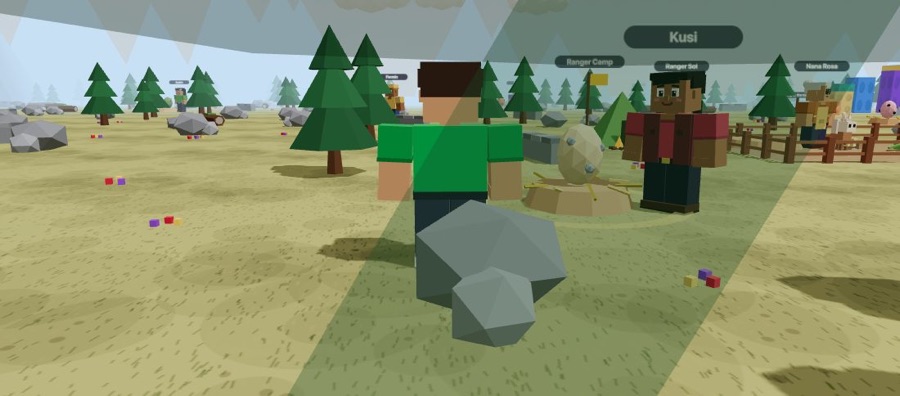
Herd alpacas past Machu Picchu, sail reed boats on Lake Titicaca and watch condors soar over Patagonia. Characters here greet you with “Allillanchu!” (hello in Quechua), and eggs hatch into hybrids of animals like llama, alpaca, vicuña and guanaco.
What your child practices
Follows Operations & Algebraic Thinking (4.OA).
Times as Many
Compare amounts with "times as many": find the bigger amount, the smaller amount, or how many times.
4.OA.A.1, 4.OA.A.2
Multi-Step Word Problems
Solve story problems with up to three steps, decide what a remainder means, and check answers make sense.
4.OA.A.3
Factors
Check if a number is a factor, list all the factors of a number up to 100, and find common factors.
4.OA.B.4
Multiples
See how factors and multiples go together, list multiples, and find common multiples.
4.OA.B.4
Prime and Composite
Decide whether a whole number from 1 to 100 is prime, composite, or neither.
4.OA.B.4
Number Patterns
Follow a rule to continue number and shape patterns, and spot features like odd and even.
4.OA.C.5
Try a problem from The Andes and Patagonia
Every problem is a short story set in the world. These are real problems from the game. Kids get endless new ones with different numbers.
Don Felipe plants 8 kinds of potatoes in his small field.
In his big field he plants 4 times as many kinds.
How many kinds of potatoes grow in the big field?
Show the answer
32
- "4 times as many" as the 8 kinds in the small field means multiply.
- 4 × 8 = 32.
You find 51 eggs to keep warm. Each woven basket holds 6 eggs.
How many baskets do you need to hold all the eggs?
Show the answer
9
- 51 ÷ 6 = 8 R 3.
- 8 full groups leave 3 eggs over.
- They need one more: 8 + 1 = 9.
Doña Julia wants to put 38 potatoes into equal piles.
A factor of 38 divides it with no remainder.
Which number is a factor of 38?
Show the answer
19
- Try dividing 38 by each choice.
- 38 ÷ 19 = 2 with no remainder.
- So 19 is a factor of 38.
Common mistakes, and how to help
Every wrong answer in Mixmonde is planned: it points to a named mistake, and the tip after a miss explains it with that problem’s numbers. These are the mistakes this world watches for, grouped the way the grown-ups’ dashboard shows them.
-
Choosing the operation
The arithmetic is fine, but the wrong operation was picked: adding when the story takes away, or multiplying when it shares out.
Mistakes we catch: times as many read as more, subtracted to compare, wrong operation and added instead of multiplied.
Try at home: Read a word problem together and draw it as a quick picture or bar before choosing + − × ÷. Ask “is the answer bigger or smaller than the numbers we started with?”
-
Order and direction
The right idea done the wrong way round: taking the smaller digit from the bigger one, dividing backwards, swapping x and y, or flipping more and less.
Mistakes we catch: multiplied the wrong way.
Try at home: For subtraction, read the top number first every time (“52 take away 37”). For division, say “how many 4s fit in 20?” so the order is clear.
-
Reading the question
The math works, but the answer is to a different question: a number already given, a halfway step, or only part of a two-step problem.
Mistakes we catch: found the total instead, stopped too early, dropped the remainder and counted a part group as full.
Try at home: Before solving, ask them to finish the sentence “The answer will be the number of …”. After solving, check that the answer fits that sentence.
-
Place value
The digits are right but their places are not: a 3 in the tens is worth 30, not 3. This shows up when carrying, borrowing, lining up numbers or placing a decimal point.
Mistakes we catch: did not check the size and stepped in the wrong place.
Try at home: Write a number on paper with a column for thousands, hundreds, tens and ones. Take turns saying what each digit is worth, then add or subtract by trading between columns out loud ("ten ones make a ten").
-
Expressions and equations
Order of operations, unknowns and the equals sign: reading “=” as “the answer comes next” instead of “both sides balance”.
Mistakes we catch: did not check the division, mixed up factor and multiple, forgot 1 and the number itself, counted pairs, not factors, factor of only one number, judged by the last digit, multiple of only one number, odd means prime, 2 is not prime, 1 is prime or composite, missed a factor, saw a factor that is not there and forgot the starting amount.
Try at home: Write puzzles like 7 + ? = 12 and ? × 4 = 20. Talk about the equals sign as a balance, not “the answer is”.
-
Counting and sequences
Losing track while counting: off by one, skipping or double-counting, or counting the wrong things (fence posts instead of gaps).
Mistakes we catch: off by one multiple, went the wrong way, one step too many and missed the odd and even pattern.
Try at home: Draw a number line and hop along it in 2s, 5s or 10s. For “posts and gaps” questions, sketch 3 posts and count the gaps before doing the big number.
Ready to hatch the first egg? A grown-up creates the account in a minute, then it’s off to the first world. Kindergarten and Grade 1 are free. The other grades come with a membership.
Create a free accountMore Grade 4 worlds: Big Numbers · Fractions · Measurement & Data · Lines, Angles & Shapes · Decimals