 Mixmonde
Play free
Numbers to 10,000: 3rd grade math in Egypt and the Nile
Place value to 10,000, odd and even, number patterns, rounding, and adding and subtracting up to 4 digits.
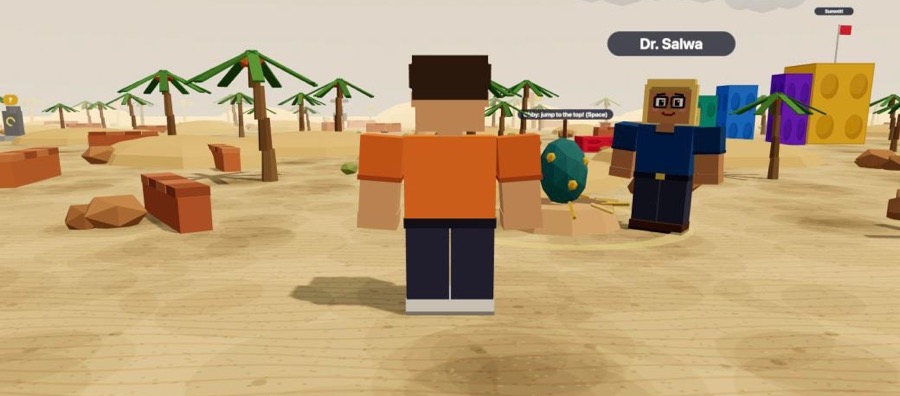
Sail the long Nile past golden desert, green farms and pyramids built thousands of years ago. Characters here greet you with “Ahlan!” (hello in Egyptian Arabic), and eggs hatch into hybrids of animals like Nile crocodile, Nile monitor, sacred ibis and hoopoe.
What your child practices
Follows Number & Operations in Base Ten (3.NBT).
Place value to 10,000
Read and write numbers to 10,000 and find what each digit is worth.
4.NBT.A.2
Comparing and ordering numbers
Find which number is greater and put numbers to 10,000 in order.
4.NBT.A.2
Odd, even and number patterns
Tell odd from even numbers and find the rule in a number pattern.
3.OA.D.9
Rounding to the nearest 10 or 100
Round numbers to the nearest 10 or 100 to find about how many.
3.NBT.A.1
Adding and subtracting up to 4 digits
Find sums and differences of numbers up to 4 digits, regrouping when you need to.
3.NBT.A.2
Mental math with 2-digit numbers
Add and subtract two 2-digit numbers in your head.
3.NBT.A.2
Two-step adding and subtracting stories
Solve stories that need two steps of adding or subtracting.
3.OA.D.8
Multiplying by multiples of 10
Multiply a 1-digit number by 10, 20, 30 and more, thinking in tens.
3.NBT.A.3
Try a problem from Egypt and the Nile
Every problem is a short story set in the world. These are real problems from the game. Kids get endless new ones with different numbers.
The Sparks board at the Egypt camp says explorers have earned three thousand, eleven Sparks.
Nana Rosa wants it written in numerals on the egg chart.
How do you write that number in numerals?
Show the answer
3011
- Three thousand: write 3 in the thousands place.
- Eleven: the hundreds, tens and ones need 3 digits, so write 011.
- Put them together: 3,011.
Ranger Mona counted scarab beetles in three fields: 2,513; 941; 2,366.
Nana Rosa asks you to put them in order.
Which list goes from least to greatest?
Show the answer
941 → 2,366 → 2,513
- 941 has only 3 digits, so it is the least.
- 2,366 and 2,513 first differ in the hundreds place, so 2,366 is less.
- Least to greatest: 941 → 2,366 → 2,513.
Four crocodile eggs sit in the sand by the Nile, each with a number tag.
Amira needs the one with an even number.
Which number is even?
Show the answer
9,598
- A number is even when its ones digit is 0, 2, 4, 6 or 8.
- 9,598 ends in 8, so it is even.
Common mistakes, and how to help
Every wrong answer in Mixmonde is planned: it points to a named mistake, and the tip after a miss explains it with that problem’s numbers. These are the mistakes this world watches for, grouped the way the grown-ups’ dashboard shows them.
-
Place value
The digits are right but their places are not: a 3 in the tens is worth 30, not 3. This shows up when carrying, borrowing, lining up numbers or placing a decimal point.
Mistakes we catch: missing placeholder zeros, wrote each part separately, skipped a zero inside the number, digit instead of its value, miscounted places, compares first digits only, compares later digits, same digits means equal, wrong step size, always rounds down, rounded up below 5, rounded to the wrong place, forgot to carry, lined up on the left, regrouped but kept the ten, lost the extra ten, smaller from larger, broke a ten but kept it, dropped the zero and added an extra zero.
Try at home: Write a number on paper with a column for thousands, hundreds, tens and ones. Take turns saying what each digit is worth, then add or subtract by trading between columns out loud ("ten ones make a ten").
-
Order and direction
The right idea done the wrong way round: taking the smaller digit from the bigger one, dividing backwards, swapping x and y, or flipping more and less.
Mistakes we catch: ordered the wrong way, symbol backwards, smaller from larger and fixed the extra the wrong way.
Try at home: For subtraction, read the top number first every time (“52 take away 37”). For division, say “how many 4s fit in 20?” so the order is clear.
-
Counting and sequences
Losing track while counting: off by one, skipping or double-counting, or counting the wrong things (fence posts instead of gaps).
Mistakes we catch: checked the wrong digit, mixed up the odd and even rule, went the wrong way and did not change the next place.
Try at home: Draw a number line and hop along it in 2s, 5s or 10s. For “posts and gaps” questions, sketch 3 posts and count the gaps before doing the big number.
-
Choosing the operation
The arithmetic is fine, but the wrong operation was picked: adding when the story takes away, or multiplying when it shares out.
Mistakes we catch: mixed up sum and difference, added instead of subtracted, wrong operation in a step, added the numbers shown and added instead of multiplied.
Try at home: Read a word problem together and draw it as a quick picture or bar before choosing + − × ÷. Ask “is the answer bigger or smaller than the numbers we started with?”
-
Number facts
The method is right, but a basic fact or one step of the arithmetic slipped. Usually a sign that facts are still being worked out each time instead of remembered.
Mistakes we catch: forgot the ones.
Try at home: Pick one times table a week. Say it while walking or climbing stairs, then quiz in a random order. Link hard facts to easy ones: 7 × 8 is 7 × 4, doubled.
-
Reading the question
The math works, but the answer is to a different question: a number already given, a halfway step, or only part of a two-step problem.
Mistakes we catch: stopped after one step.
Try at home: Before solving, ask them to finish the sentence “The answer will be the number of …”. After solving, check that the answer fits that sentence.
Ready to hatch the first egg? A grown-up creates the account in a minute, then it’s off to the first world. Kindergarten and Grade 1 are free. The other grades come with a membership.
Create a free accountMore Grade 3 worlds: Multiplication & Division · Fractions · Area, Perimeter & Shapes · Measuring & Graphs · Time & Money