 Mixmonde
Play free
Fractions: 3rd grade math in Madagascar
Unit fractions, fractions on a number line, equivalent fractions, comparing, and adding related fractions.
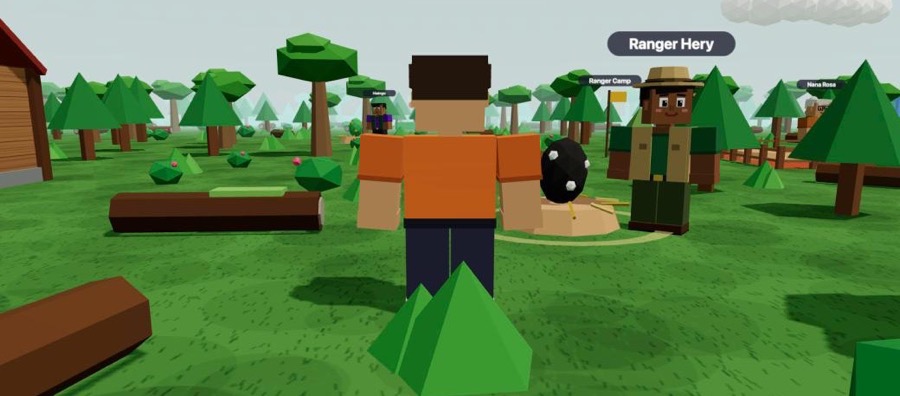
Leap with lemurs on the Great Red Island, where most animals live nowhere else on Earth. Characters here greet you with “Salama!” (hello in Malagasy), and eggs hatch into hybrids of animals like ring-tailed lemur, Verreaux's sifaka, diademed sifaka and indri.
What your child practices
Follows Number & Operations — Fractions (3.NF).
Unit fractions and parts of a whole
Cut a rice cake into 4 equal pieces: each piece is 1/4, and 3 pieces are 3/4.
3.NF.A.1, 3.G.A.2
Fractions on a number line
Split the space from 0 to 1 into equal jumps. Each jump is a unit fraction, like 1/4.
3.NF.A.2
Equivalent fractions
1/2 of a field is the same as 2/4 of it: multiply the top and bottom by the same number.
3.NF.A.3a, 3.NF.A.3b
Simplest form
6/8 of the eggs is 3/4 of them: divide the top and bottom by the same number until you can’t.
3.NF.A.3b
Whole numbers as fractions
3 whole meters is 12 pieces of 1/4 meter, so 3 = 12/4. And 4/4 is 1 whole.
3.NF.A.3c
Comparing and ordering fractions
Same top number? Bigger pieces win. Same bottom number? More pieces win. Or check against 1/2.
3.NF.A.3d
Adding and subtracting related fractions
Halves and fourths are related: rename 1/2 as 2/4, then add 2/4 + 1/4 = 3/4.
5.NF.A.1
Try a problem from Madagascar
Every problem is a short story set in the world. These are real problems from the game. Kids get endless new ones with different numbers.
At a village market, a cook cuts a round rice cake into 3 equal pieces.
Your hatchling eats 1 of the pieces.
What fraction of the rice cake did your hatchling eat?
Show the answer
1/3
- There are 3 equal parts in all, so the bottom number is 3.
- 1 part is eaten, so the top number is 1.
- The fraction is 1/3.
There is a number line on a forest trail, from 0 to 1.
It has 5 tick marks, counting 0 and 1, with 4 equal spaces.
A ring-tailed lemur starts at 0 and hops 2 spaces.
What fraction names the lemur's spot?
Show the answer
2/4
- The space from 0 to 1 has 4 equal parts, so each space is 1/4.
- 2 spaces from 0 is 2 × 1/4.
- That is 2/4.
Your incubator dial is set at 2/3.
A new dial is marked in sixths.
Which fraction is the same size as 2/3?
Show the answer
4/6
- 3 × 2 = 6, so sixths are 2 times smaller than thirds.
- Multiply the top by 2 too: 2 × 2 = 4.
- So 2/3 = 4/6.
Common mistakes, and how to help
Every wrong answer in Mixmonde is planned: it points to a named mistake, and the tip after a miss explains it with that problem’s numbers. These are the mistakes this world watches for, grouped the way the grown-ups’ dashboard shows them.
-
Fractions and decimals
Treating the top and bottom of a fraction as two separate whole numbers (so 1/2 + 1/3 = 2/5), thinking a bigger bottom number means a bigger piece, or reading 0.25 as bigger than 0.3.
Mistakes we catch: swapped the top and bottom numbers, put the other parts on the bottom, counted the wrong parts, wrote how many parts, not one part, counted the cuts, not the pieces, forgot the parts must be equal, used the whole line as one whole, added instead of multiplying, changed only one number, stopped before simplest form, divided only one number, took away instead of dividing, counted meters, not planks, counted one whole only, counted pieces, not wholes, thought a bigger bottom number means a bigger fraction, thought the same top number means equal, thought the same bottom number means equal, looked only at the top numbers, looked only at the size of the pieces, added (or took away) the tops and the bottoms and changed the bottom number but not the top.
Try at home: Use a chocolate bar or paper strips to compare fractions: is 1/3 or 1/5 bigger? Line up fraction strips to find equal ones (2/4 = 1/2).
-
Counting and sequences
Losing track while counting: off by one, skipping or double-counting, or counting the wrong things (fence posts instead of gaps).
Mistakes we catch: counted tick marks, not spaces and counted the 0 mark as a jump.
Try at home: Draw a number line and hop along it in 2s, 5s or 10s. For “posts and gaps” questions, sketch 3 posts and count the gaps before doing the big number.
-
Choosing the operation
The arithmetic is fine, but the wrong operation was picked: adding when the story takes away, or multiplying when it shares out.
Mistakes we catch: added when it should take away (or the other way round).
Try at home: Read a word problem together and draw it as a quick picture or bar before choosing + − × ÷. Ask “is the answer bigger or smaller than the numbers we started with?”
Ready to hatch the first egg? A grown-up creates the account in a minute, then it’s off to the first world. Kindergarten and Grade 1 are free. The other grades come with a membership.
Create a free accountMore Grade 3 worlds: Numbers to 10,000 · Multiplication & Division · Area, Perimeter & Shapes · Measuring & Graphs · Time & Money