 Mixmonde
Play free
Multiplication & Division: 3rd grade math in Japan
Equal groups, the times tables to 10 × 10, division with and without remainders, and two-step word problems.
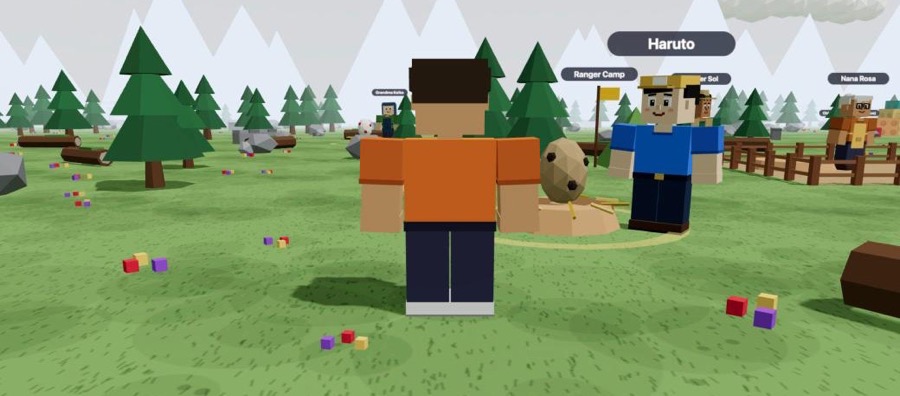
Climb misty mountains, walk through red shrine gates and soak in the steam of warm hot springs. Characters here greet you with “Konnichiwa!” (hello in Japanese), and eggs hatch into hybrids of animals like Japanese macaque, Asian black bear, sika deer and Japanese serow.
What your child practices
Follows Operations & Algebraic Thinking (3.OA).
Equal groups and arrays
See multiplication as equal groups and arrays, and write the times sentence that matches.
3.OA.A.1, 3.OA.A.3
Times tables of 6, 7, 8 and 9
Learn the 6, 7, 8 and 9 times tables, build them from facts you know, and use them to divide.
3.OA.C.7
Division within 100
Share into equal groups, find how many groups fit, space things around a loop, and divide with times facts.
3.OA.A.2, 3.OA.A.3, 3.OA.C.7
Finding the unknown number
Find the missing number in a times or division sentence, and divide by thinking of a times fact.
3.OA.A.4, 3.OA.B.6
Properties of multiplication
Turn arrays around, regroup factors, and break a hard fact into two easier ones.
3.OA.B.5
Division with remainders
Divide with a remainder, use the words product, quotient and remainder, and decide what the leftover means.
4.NBT.B.6
Multiplying and dividing up to 3 digits by 1 digit
Multiply and divide numbers up to 999 by a 1-digit number, carrying and regrouping place by place.
4.NBT.B.5, 4.NBT.B.6
Two-step word problems
Solve two-step stories with all four operations, one step at a time.
3.OA.D.8
Try a problem from Japan
Every problem is a short story set in the world. These are real problems from the game. Kids get endless new ones with different numbers.
At the hot spring, 4 snow monkey families soak in the warm water.
Each family has 2 monkeys.
How many snow monkeys are in the hot spring?
Show the answer
8
- There are 4 groups with 2 in each group.
- 4 × 2 = 8.
Ranger Kenji teaches a times-table trick at the camp by the cherry trees.
"I know 5 × 6 = 30," he says.
How can that help you find 6 × 6? What is 6 × 6?
Show the answer
36
- 6 × 6 is 5 × 6 plus one more 6.
- 30 + 6 = 36.
You have 30 eggs to carry to the incubator.
Your basket holds 3 eggs on each trip.
How many trips do you make?
Show the answer
10
- How many groups of 3 make 30?
- 30 ÷ 3 = 10, because 10 × 3 = 30.
Common mistakes, and how to help
Every wrong answer in Mixmonde is planned: it points to a named mistake, and the tip after a miss explains it with that problem’s numbers. These are the mistakes this world watches for, grouped the way the grown-ups’ dashboard shows them.
-
Choosing the operation
The arithmetic is fine, but the wrong operation was picked: adding when the story takes away, or multiplying when it shares out.
Mistakes we catch: added instead of multiplying, multiplied instead of dividing, subtracted instead of dividing, changed × into +, wrong operation and wrong second step.
Try at home: Read a word problem together and draw it as a quick picture or bar before choosing + − × ÷. Ask “is the answer bigger or smaller than the numbers we started with?”
-
Reading the question
The math works, but the answer is to a different question: a number already given, a halfway step, or only part of a two-step problem.
Mistakes we catch: counted one group only, gave the number in each group, gave the quotient, not the remainder, counted the leftovers as a group, ignored the remainder, mixed up the words and stopped after one step.
Try at home: Before solving, ask them to finish the sentence “The answer will be the number of …”. After solving, check that the answer fits that sentence.
-
Counting and sequences
Losing track while counting: off by one, skipping or double-counting, or counting the wrong things (fence posts instead of gaps).
Mistakes we catch: miscounted the groups, counted only the edge and counted a loop like a line.
Try at home: Draw a number line and hop along it in 2s, 5s or 10s. For “posts and gaps” questions, sketch 3 posts and count the gaps before doing the big number.
-
Number facts
The method is right, but a basic fact or one step of the arithmetic slipped. Usually a sign that facts are still being worked out each time instead of remembered.
Mistakes we catch: used the fact next door, used the wrong table, changed by one, not by a group, remainder too big and added the carry too soon.
Try at home: Pick one times table a week. Say it while walking or climbing stairs, then quiz in a random order. Link hard facts to easy ones: 7 × 8 is 7 × 4, doubled.
-
Expressions and equations
Order of operations, unknowns and the equals sign: reading “=” as “the answer comes next” instead of “both sides balance”.
Mistakes we catch: treated it like adding, multiplied instead of dividing, divided instead of multiplying, multiplied only one part and mixed up the grouping.
Try at home: Write puzzles like 7 + ? = 12 and ? × 4 = 20. Talk about the equals sign as a balance, not “the answer is”.
-
Place value
The digits are right but their places are not: a 3 in the tens is worth 30, not 3. This shows up when carrying, borrowing, lining up numbers or placing a decimal point.
Mistakes we catch: forgot to regroup and skipped a zero in the quotient.
Try at home: Write a number on paper with a column for thousands, hundreds, tens and ones. Take turns saying what each digit is worth, then add or subtract by trading between columns out loud ("ten ones make a ten").
Ready to hatch the first egg? A grown-up creates the account in a minute, then it’s off to the first world. Kindergarten and Grade 1 are free. The other grades come with a membership.
Create a free accountMore Grade 3 worlds: Numbers to 10,000 · Fractions · Area, Perimeter & Shapes · Measuring & Graphs · Time & Money