 Mixmonde
Play free
Multiplication & Division: 2nd grade math in New Guinea
Arrays, doubles and halves, the tables of 2, 3, 4, 5 and 10, dividing, and multiplying and dividing stories.
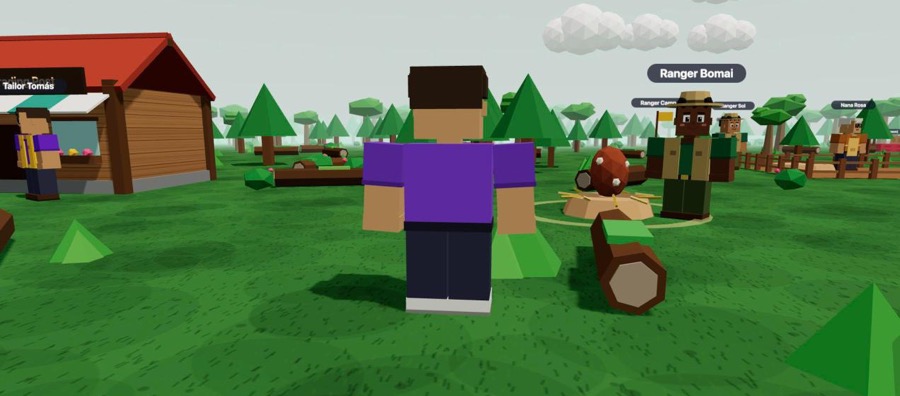
Paddle the Sepik River and climb misty mountains, where birds-of-paradise dance in the trees. Characters here greet you with “Gude!” (hello in Tok Pisin), and eggs hatch into hybrids of animals like Raggiana bird-of-paradise, superb bird-of-paradise, King of Saxony bird-of-paradise and blue bird-of-paradise.
What your child practices
Follows Operations & Algebraic Thinking — Equal Groups (2.OA.C), plus the tables of 2, 3, 4, 5 and 10 (Singapore P2).
Arrays and repeated addition
Count things in rows by adding the same number again and again, and see an even number as two equal parts.
2.OA.C.3, 2.OA.C.4
Doubles and halves
Double a number by adding it to itself, and halve an even number into two equal parts.
2.OA.C.3
Tables of 2, 3, 4, 5 and 10
Know the times tables of 2, 3, 4, 5 and 10, by skip counting and from memory.
3.OA.C.7
Dividing within the tables
Share equally and make equal groups, write it with ÷, and divide using the tables of 2, 3, 4, 5 and 10.
3.OA.A.2, 3.OA.C.7
Multiplication and division facts
See how a times fact and its division facts belong together, and use one to find the other.
3.OA.B.6
Multiplying and dividing stories
Solve one-step stories about equal groups and sharing with the tables of 2, 3, 4, 5 and 10.
3.OA.A.3
Try a problem from New Guinea
Every problem is a short story set in the world. These are real problems from the game. Kids get endless new ones with different numbers.
In the farm incubator, the eggs sit in 3 rows.
Each row has 2 eggs.
How many eggs are in the incubator?
Show the answer
6
- There are 3 rows of 2: 2 + 2 + 2.
- 2 + 2 + 2 = 6.
Dika sews 25 beads on one side of her sing-sing belt.
She sews the same number on the other side.
How many beads are on the belt?
Show the answer
50
- Double 25 is 25 + 25.
- 25 + 25 = 50.
10 dancers get ready for the sing-sing.
Each dancer paints 3 stripes on their face.
How many stripes do they paint in all?
Show the answer
30
- There are 10 groups of 3.
- 10 × 3 = 30.
Common mistakes, and how to help
Every wrong answer in Mixmonde is planned: it points to a named mistake, and the tip after a miss explains it with that problem’s numbers. These are the mistakes this world watches for, grouped the way the grown-ups’ dashboard shows them.
-
Choosing the operation
The arithmetic is fine, but the wrong operation was picked: adding when the story takes away, or multiplying when it shares out.
Mistakes we catch: added rows and columns, doubled instead of halving, halved instead of doubling, added or took away 2, added instead of multiplying, multiplied instead of dividing, subtracted instead of dividing and treated it like adding.
Try at home: Act out word problems with toys: “3 birds, 2 fly away.” Ask “are we putting together or taking away?” before any numbers.
-
Counting and sequences
Losing track while counting: off by one, skipping or double-counting, or counting the wrong things (fence posts instead of gaps).
Mistakes we catch: missed a row.
Try at home: Count objects by touching or moving each one into a pile. Count on from a number other than 1 (“start at 8 and count 5 more”), and count back too.
-
Reading the question
The math works, but the answer is to a different question: a number already given, a halfway step, or only part of a two-step problem.
Mistakes we catch: counted meters, not planks, gave the number you divide by and counted one group.
Try at home: Read the question aloud together and ask “what are we trying to find?” before solving. Point at the question part of the sentence.
-
Place value
The digits are right but their places are not: a 3 in the tens is worth 30, not 3. This shows up when carrying, borrowing, lining up numbers or placing a decimal point.
Mistakes we catch: doubled or halved only the tens.
Try at home: Make bundles of 10 with straws or pencils and a rubber band. Build numbers like 34 (3 bundles, 4 loose) and swap a bundle for 10 loose ones when you need to take some away.
-
Number facts
The method is right, but a basic fact or one step of the arithmetic slipped. Usually a sign that facts are still being worked out each time instead of remembered.
Mistakes we catch: used the fact next door and used the wrong table.
Try at home: Play “make 10” with fingers or a deck of cards (pairs that add to 10), then “make 20”. Two minutes a day beats one long session.
-
Order and direction
The right idea done the wrong way round: taking the smaller digit from the bigger one, dividing backwards, swapping x and y, or flipping more and less.
Mistakes we catch: mixed up the order.
Try at home: Use “more” and “fewer” in everyday talk: which plate has more grapes, how many fewer? Line things up side by side to compare.
Ready to hatch the first egg? A grown-up creates the account in a minute, then it’s off to the first world. Kindergarten and Grade 1 are free. The other grades come with a membership.
Create a free accountMore Grade 2 worlds: Numbers to 1,000 · Adding & Subtracting to 1,000 · Fractions · Measuring & Graphs · Time, Money & Shapes