 Mixmonde
Play free
Adding & Subtracting to 1,000: 2nd grade math in New Zealand
Adding and subtracting within 100 and up to 3 digits, mental math with tens and hundreds, and two-step story problems.
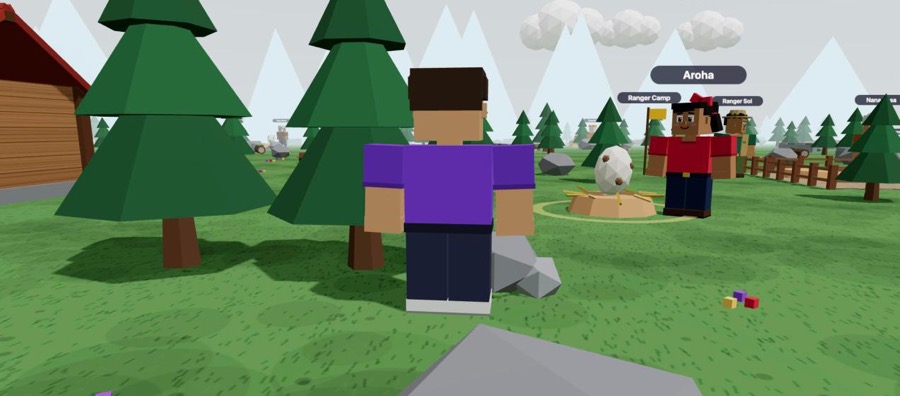
Climb the snowy Southern Alps, sail deep green fiords and search the fern forest for kiwi at night. Characters here greet you with “Kia ora!” (hello in te reo Māori), and eggs hatch into hybrids of animals like brown kiwi, weka, kea and kākā.
What your child practices
Follows Operations & Algebraic Thinking (2.OA.A–B) and Base Ten (2.NBT.B).
Adding and subtracting within 100
Add and take away 2-digit numbers, trading a ten when you need to.
2.NBT.B.5
Adding and subtracting 3-digit numbers
Add and subtract numbers up to 1,000, carrying and trading when you need to.
2.NBT.B.7
Mental math with tens and hundreds
Add or take away ones, tens or hundreds from a 3-digit number in your head.
2.NBT.B.8
Adding up to four numbers
Add three or four 2-digit numbers by adding the ones and the tens.
2.NBT.B.6
Facts within 20
Add and subtract within 20 quickly, using make-a-ten and doubles.
2.OA.B.2
Two-step story problems
Solve stories that need two steps of adding or subtracting.
2.OA.A.1
How many more? How many fewer?
Compare two amounts and find how many more or how many fewer.
2.OA.A.1
Try a problem from New Zealand
Every problem is a short story set in the world. These are real problems from the game. Kids get endless new ones with different numbers.
Aroha needs 100 Sparks for a cozy nest box for her kiwi hatchling.
She has 19 Sparks so far.
How many more Sparks does she need?
Show the answer
81
- Count up from 19 to the next ten: 19 + 1 = 20.
- From 20 to 100 is 80.
- 1 + 80 = 81.
Koro Hemi carves two numbers into a wooden board: 449 and 376.
He asks you to add them.
What is 449 + 376?
Show the answer
825
- Line up the places: hundreds, tens and ones of 449 and 376.
- Add the ones, then the tens, then the hundreds. Carry 1 when a column makes 10 or more.
- 449 + 376 = 825.
Aroha has 393 Sparks. She spends 100 Sparks on seeds for her hatchling.
Work it out in your head.
How many Sparks does she have left?
Show the answer
293
- 100 is 1 hundred.
- Only the hundreds digit changes: 3 − 1 = 2.
- 393 − 100 = 293.
Common mistakes, and how to help
Every wrong answer in Mixmonde is planned: it points to a named mistake, and the tip after a miss explains it with that problem’s numbers. These are the mistakes this world watches for, grouped the way the grown-ups’ dashboard shows them.
-
Choosing the operation
The arithmetic is fine, but the wrong operation was picked: adding when the story takes away, or multiplying when it shares out.
Mistakes we catch: added instead of taking away, went the wrong way, wrong operation, wrong operation in a step, added the numbers shown and followed the keyword.
Try at home: Act out word problems with toys: “3 birds, 2 fly away.” Ask “are we putting together or taking away?” before any numbers.
-
Place value
The digits are right but their places are not: a 3 in the tens is worth 30, not 3. This shows up when carrying, borrowing, lining up numbers or placing a decimal point.
Mistakes we catch: subtracted without regrouping, traded a ten but kept it, forgot to carry, lined up on the left, traded but kept it, changed the wrong place, did not change the next place and carried only one ten.
Try at home: Make bundles of 10 with straws or pencils and a rubber band. Build numbers like 34 (3 bundles, 4 loose) and swap a bundle for 10 loose ones when you need to take some away.
-
Order and direction
The right idea done the wrong way round: taking the smaller digit from the bigger one, dividing backwards, swapping x and y, or flipping more and less.
Mistakes we catch: smaller from larger.
Try at home: Use “more” and “fewer” in everyday talk: which plate has more grapes, how many fewer? Line things up side by side to compare.
-
Reading the question
The math works, but the answer is to a different question: a number already given, a halfway step, or only part of a two-step problem.
Mistakes we catch: left out a number, stopped after one step and gave one of the amounts.
Try at home: Read the question aloud together and ask “what are we trying to find?” before solving. Point at the question part of the sentence.
-
Number facts
The method is right, but a basic fact or one step of the arithmetic slipped. Usually a sign that facts are still being worked out each time instead of remembered.
Mistakes we catch: slipped making a ten and near double slip.
Try at home: Play “make 10” with fingers or a deck of cards (pairs that add to 10), then “make 20”. Two minutes a day beats one long session.
-
Counting and sequences
Losing track while counting: off by one, skipping or double-counting, or counting the wrong things (fence posts instead of gaps).
Mistakes we catch: counted the starting number.
Try at home: Count objects by touching or moving each one into a pile. Count on from a number other than 1 (“start at 8 and count 5 more”), and count back too.
Ready to hatch the first egg? A grown-up creates the account in a minute, then it’s off to the first world. Kindergarten and Grade 1 are free. The other grades come with a membership.
Create a free accountMore Grade 2 worlds: Numbers to 1,000 · Multiplication & Division · Fractions · Measuring & Graphs · Time, Money & Shapes