 Mixmonde
Play free
Measuring & Graphs: 2nd grade math in The Philippines
Centimeters and meters, adding and comparing lengths, kilograms, grams and liters, and picture and bar graphs.
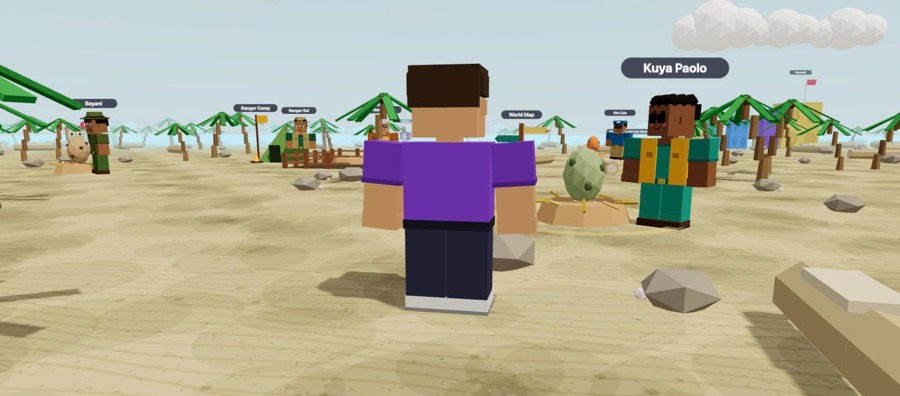
Sail a bangka past bright coral reefs and green rice terraces, where tarsiers peek and whale sharks glide. Characters here greet you with “Kumusta!” (hello in Filipino (it comes from the Spanish “¿cómo está?”, how are you?)), and eggs hatch into hybrids of animals like Philippine tarsier, Philippine eagle, whale shark (butanding) and manta ray.
What your child practices
Follows Measurement & Data — Length and Data (2.MD.A–B, 2.MD.D).
Centimeters and meters
Measure with a ruler in centimeters and pick cm or m for how long things are.
2.MD.A.1, 2.MD.A.3
How much longer?
Find how much longer one thing is than another, and put lengths in order.
2.MD.A.4
Adding and subtracting lengths
Add lengths all the way around a pen, and add or take away lengths in stories.
2.MD.B.5
Lengths on a number line
Find how far apart two points are, and where a jump lands, on a number line.
2.MD.B.6
Kilograms and grams
Read a scale in kilograms or grams, and compare and add masses.
3.MD.A.2
Liters
Read how many liters are in a container, and compare and add amounts of water.
3.MD.A.2
Picture graphs with scales
Read picture graphs where each picture stands for 2, 5 or 10.
2.MD.D.10
Bar graphs
Read bar graphs, compare bars, and find how tall a missing bar should be.
2.MD.D.10
Try a problem from The Philippines
Every problem is a short story set in the world. These are real problems from the game. Kids get endless new ones with different numbers.
Tala puts a pandan leaf for weaving a banig mat next to a ruler.
It starts at the 6 cm mark and ends at the 26 cm mark.
How long is the leaf?
Show the answer
20 cm
- It starts at 6 cm and ends at 26 cm.
- 26 − 6 = 20.
- It is 20 cm long.
A stone wall on the rice terraces is 82 cm tall.
A young rice plant beside it is 25 cm tall.
How much shorter is the rice plant than the wall?
Show the answer
57 cm
- Find the difference: 82 − 25 = 57.
- It is 57 cm longer.
Your hatchling needs a fence around its pen at the farm.
The pen is 24 m long and 9 m wide.
How many meters of fence go all the way around?
Show the answer
66 m
- Long sides: 24 + 24 = 48. Short sides: 9 + 9 = 18.
- 48 + 18 = 66 m.
Common mistakes, and how to help
Every wrong answer in Mixmonde is planned: it points to a named mistake, and the tip after a miss explains it with that problem’s numbers. These are the mistakes this world watches for, grouped the way the grown-ups’ dashboard shows them.
-
Units and measuring
The number is fine but the unit is off: a missing conversion (cm and m), the ruler not started at zero, or area mixed up with perimeter.
Mistakes we catch: read the end number, counted the marks, mixed up cm and m, not a unit of length, added only two sides, missed a side and counted each mark as 1.
Try at home: Measure things at home with a ruler, starting at 0, and with hand spans or shoes. Ask which is longer and by how much.
-
Choosing the operation
The arithmetic is fine, but the wrong operation was picked: adding when the story takes away, or multiplying when it shares out.
Mistakes we catch: added instead of subtracted, added instead of subtracted (or the other way) and added the two points.
Try at home: Act out word problems with toys: “3 birds, 2 fly away.” Ask “are we putting together or taking away?” before any numbers.
-
Reading the question
The math works, but the answer is to a different question: a number already given, a halfway step, or only part of a two-step problem.
Mistakes we catch: gave one of the lengths, mixed up longest and shortest, compared only two, gave the end point, gave the jump, mixed up heaviest and lightest, mixed up most and least and picked the tallest bar.
Try at home: Read the question aloud together and ask “what are we trying to find?” before solving. Point at the question part of the sentence.
-
Order and direction
The right idea done the wrong way round: taking the smaller digit from the bigger one, dividing backwards, swapping x and y, or flipping more and less.
Mistakes we catch: went the wrong way.
Try at home: Use “more” and “fewer” in everyday talk: which plate has more grapes, how many fewer? Line things up side by side to compare.
-
Counting and sequences
Losing track while counting: off by one, skipping or double-counting, or counting the wrong things (fence posts instead of gaps).
Mistakes we catch: counted each mark as 1 and forgot where the marks start.
Try at home: Count objects by touching or moving each one into a pile. Count on from a number other than 1 (“start at 8 and count 5 more”), and count back too.
-
Graphs and data
Reading graphs: missing that one picture stands for several, misreading the scale, or mixing up mean, median and range.
Mistakes we catch: counted pictures, not what they stand for, forgot a row and forgot a bar.
Try at home: Make a picture graph of the family’s favorite fruit with stickers, then try one where each sticker counts for 2.
Ready to hatch the first egg? A grown-up creates the account in a minute, then it’s off to the first world. Kindergarten and Grade 1 are free. The other grades come with a membership.
Create a free accountMore Grade 2 worlds: Numbers to 1,000 · Adding & Subtracting to 1,000 · Multiplication & Division · Fractions · Time, Money & Shapes