 Mixmonde
Play free
Shapes & Equal Shares: 1st grade math in The Maldives
Naming flat and solid shapes, sides and corners, shape patterns, putting shapes together, halves and fourths.
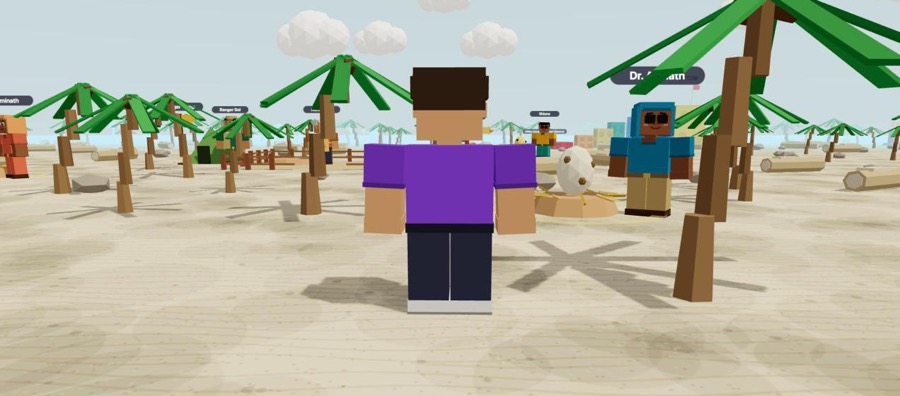
Sail a dhoni between tiny coral islands where sea turtles nest and whale sharks glide by. Characters here greet you with “Assalaamu alaikum!” (hello in the Maldives (it is Arabic for "peace be with you")), and eggs hatch into hybrids of animals like green sea turtle, hawksbill turtle, whale shark and reef manta ray.
What your child practices
Follows Geometry (1.G).
Naming shapes
Name circles, triangles, squares, rectangles and hexagons from their sides and corners.
1.G.A.1
Sides and corners
Count the straight sides and corners of flat shapes.
1.G.A.1
Shape patterns
Find the part that repeats and say which shape comes next.
1.G.A.1
Putting shapes together
Put triangles, squares and half circles together to make new shapes.
1.G.A.2
Cubes, cones and cylinders
Name solid shapes, count their flat faces, and build with them.
1.G.A.2
Halves and fourths
Cut circles and rectangles into 2 or 4 equal parts: halves, fourths and quarters.
1.G.A.3
Try a problem from The Maldives
Every problem is a short story set in the world. These are real problems from the game. Kids get endless new ones with different numbers.
Ibrahim cuts a shape out of a palm leaf for the egg nest.
It is round all the way around.
It has no straight sides and no corners.
What is the name of this shape?
Show the answer
circle
- A round shape with no corners is a circle.
Moosa cuts 2 squares out of a palm leaf for the egg nest.
How many sides do the two shapes have in all?
Show the answer
8
- The square has 4 sides.
- The square has 4 sides.
- 4 + 4 = 8.
Shiuna puts tiles on the path in a pattern.
Hexagon, hexagon, square, hexagon, hexagon, square, hexagon, hexagon.
What shape comes next?
Show the answer
square
- The part that repeats is: hexagon, hexagon, square.
- Keep saying it: the next shape is a square.
Common mistakes, and how to help
Every wrong answer in Mixmonde is planned: it points to a named mistake, and the tip after a miss explains it with that problem’s numbers. These are the mistakes this world watches for, grouped the way the grown-ups’ dashboard shows them.
-
Shapes and angles
Shape properties: counting sides, corners or faces, symmetry, naming angles, measuring with a protractor or radius vs diameter.
Mistakes we catch: miscounted the sides, mixed up round and straight, ignored the side lengths, judged by color or size, thought turning changes the shape, gave a circle corners, thought sides and corners differ, thought the new shape is the same, ignored the pieces, used a flat shape name, mixed up solid shapes, counted only the faces you can see, missed the top and bottom, counted the curved side, counted the point, thought only about rolling and thought only about stacking.
Try at home: Go on a shape hunt at home and count sides and corners. Build shapes with sticks or straws.
-
Counting and sequences
Losing track while counting: off by one, skipping or double-counting, or counting the wrong things (fence posts instead of gaps).
Mistakes we catch: counted one twice, missed one, repeated the last shape, skipped ahead and picked a shape not in the pattern.
Try at home: Count objects by touching or moving each one into a pile. Count on from a number other than 1 (“start at 8 and count 5 more”), and count back too.
-
Reading the question
The math works, but the answer is to a different question: a number already given, a halfway step, or only part of a two-step problem.
Mistakes we catch: counted only one shape, counted pieces for one shape only, counted shapes, not pieces, added pieces and shapes, counted builds, not blocks and counted one build only.
Try at home: Read the question aloud together and ask “what are we trying to find?” before solving. Point at the question part of the sentence.
-
Fractions and decimals
Treating the top and bottom of a fraction as two separate whole numbers (so 1/2 + 1/3 = 2/5), thinking a bigger bottom number means a bigger piece, or reading 0.25 as bigger than 0.3.
Mistakes we catch: mixed up halves and fourths, called a part the whole, counted parts that are not equal, thought halves must look one way and thought more parts means bigger parts.
Try at home: Fold paper or cut a sandwich into 2 and 4 equal parts. Ask which is bigger, a half or a quarter, and why the parts must be equal.
Ready to hatch the first egg? A grown-up creates the account in a minute, then it’s off to the first world. Grade 1 is free, for good.
Create a free accountMore Grade 1 worlds: Numbers to 100 · Adding & Subtracting to 20 · Adding & Subtracting to 100 · Length, Time & Graphs · Equal Groups & Money