 Mixmonde
Play free
Equal Groups & Money: 1st grade math in Kenya
Equal groups, multiplying within 40, sharing equally, and counting coins and dollars.
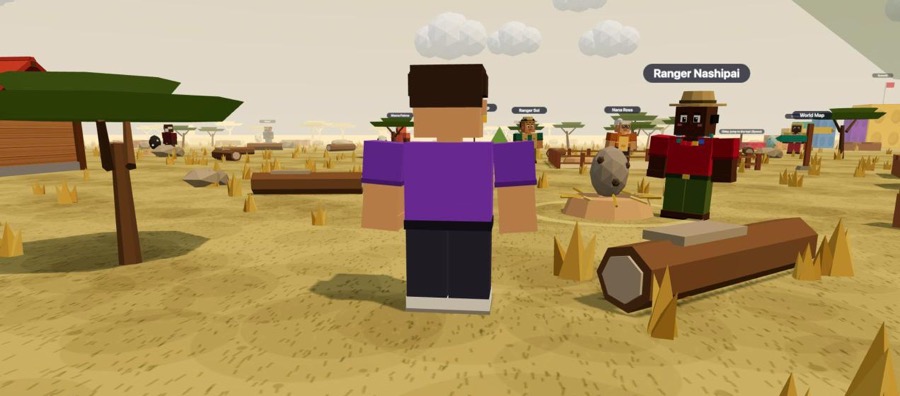
See a lake turn pink with flamingos, and spot rhinos with a city behind them. Characters here greet you with “Jambo!” (hello in Kiswahili), and eggs hatch into hybrids of animals like lesser flamingo, great white pelican, black rhinoceros and Kirk's dik-dik.
What your child practices
Follows Equal groups (Singapore P1, US 2.OA.C) and money (2.MD.C.8).
Equal groups
Count equal groups and write them with ×.
2.OA.C.4
Multiplying within 40
Add the same number again and again, and multiply within 40.
2.OA.C.4
Sharing equally
Share things equally, or put them in equal groups, within 20.
3.OA.A.2
Group story problems
Solve story problems about equal groups and sharing.
3.OA.A.3
Counting coins
Count pennies, nickels, dimes and quarters up to 100 cents.
2.MD.C.8
Counting dollars
Count dollar bills up to $100.
2.MD.C.8
Money story problems
Add and take away money in cents or in dollars.
2.MD.C.8
Try a problem from Kenya
Every problem is a short story set in the world. These are real problems from the game. Kids get endless new ones with different numbers.
2 flamingo families wade in Lake Nakuru.
Each family has 3 pink flamingos.
How many flamingos are there in all?
Show the answer
6
- There are 2 groups of 3.
- 3 + 3 = 6.
- 2 × 3 = 6.
4 rhinos eat at Nairobi National Park.
Each rhino eats 4 piles of leaves.
That is 4 × 4.
How many piles of leaves do they eat?
Show the answer
16 piles
- 4 groups of 4.
- Count by 4s: 4, 8, 12, 16.
- 4 × 4 = 16.
Wanjiru has 20 bright beads.
Wanjiru puts them on 5 plates, the same number on each.
How many beads go on each plate?
Show the answer
4
- Share 20 into 5 equal groups.
- 5 groups of 4 make 20.
- 20 ÷ 5 = 4. Each gets 4.
Common mistakes, and how to help
Every wrong answer in Mixmonde is planned: it points to a named mistake, and the tip after a miss explains it with that problem’s numbers. These are the mistakes this world watches for, grouped the way the grown-ups’ dashboard shows them.
-
Choosing the operation
The arithmetic is fine, but the wrong operation was picked: adding when the story takes away, or multiplying when it shares out.
Mistakes we catch: added the two numbers, added instead of multiplied, took away instead of sharing, shared between 2, took away instead of adding and added instead of taking away.
Try at home: Act out word problems with toys: “3 birds, 2 fly away.” Ask “are we putting together or taking away?” before any numbers.
-
Reading the question
The math works, but the answer is to a different question: a number already given, a halfway step, or only part of a two-step problem.
Mistakes we catch: counted one group, mixed up groups and size and gave a number from the story.
Try at home: Read the question aloud together and ask “what are we trying to find?” before solving. Point at the question part of the sentence.
-
Counting and sequences
Losing track while counting: off by one, skipping or double-counting, or counting the wrong things (fence posts instead of gaps).
Mistakes we catch: missed a group, one group too few and one group too many.
Try at home: Count objects by touching or moving each one into a pile. Count on from a number other than 1 (“start at 8 and count 5 more”), and count back too.
-
Time and money
Reading the clock or counting money: hour and minute hands mixed up, treating an hour as 100 minutes, or coin values.
Mistakes we catch: counted the coins, mixed up nickel and dime, forgot the pennies, counted the bills, mixed up $5 and $10 and forgot the one-dollar bills.
Try at home: Read a real clock at meals and bedtime (“the short hand is on 7”). Sort and count real coins by value, not by how many.
Ready to hatch the first egg? A grown-up creates the account in a minute, then it’s off to the first world. Grade 1 is free, for good.
Create a free accountMore Grade 1 worlds: Numbers to 100 · Adding & Subtracting to 20 · Adding & Subtracting to 100 · Length, Time & Graphs · Shapes & Equal Shares