 Mixmonde
Play free
Length, Time & Graphs: 1st grade math in Norway
Comparing and measuring lengths, telling time to the hour and half hour, and reading picture graphs.
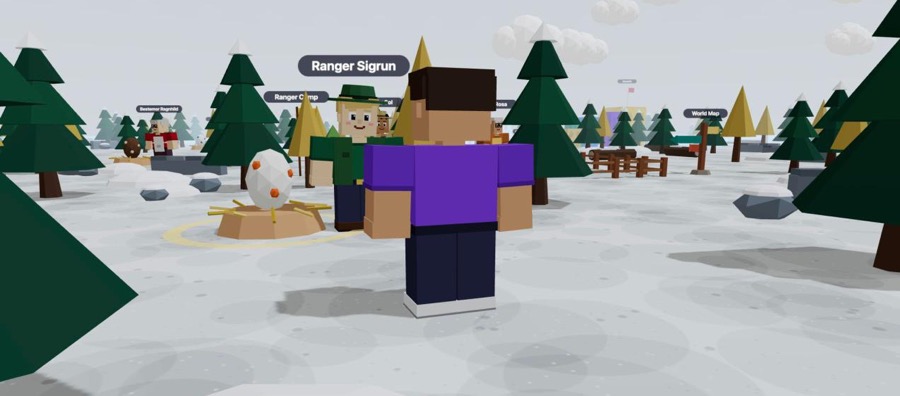
Sail deep blue fjords, past wooden stave churches and red fishing huts by the sea. Characters here greet you with “Hei!” (hi in Norwegian), and eggs hatch into hybrids of animals like Atlantic puffin, black guillemot, orca and harbor porpoise.
What your child practices
Follows Measurement & Data (1.MD).
Longer and shorter
Compare and order lengths, and compare two things using a string as long as one of them.
1.MD.A.1
Measuring with units
Measure a length with same-size units laid end to end, with no gaps or overlaps.
1.MD.A.2
Time to the hour and half hour
Read the clock at o’clock and half past, and say times like 4:30 as "half past 4".
1.MD.B.3
What happens first?
Put times in order, and find the time one hour or half an hour later.
1.MD.B.3
Picture graphs
Read picture graphs with three rows: how many in all, how many more, which is most.
1.MD.C.4
Sorting and counting
Sort things into groups, count each group, and find how many in all or how many are left.
1.MD.C.4
Try a problem from Norway
Every problem is a short story set in the world. These are real problems from the game. Kids get endless new ones with different numbers.
Sigrid looks at the fishing boats in the harbor.
The green boat is shorter than the red boat.
Which boat is longer?
Show the answer
the red boat
- The red boat is longer.
- The green boat is shorter.
- So the answer is the red boat.
Erik and Lars measure the hatchling's bed with sticks.
Erik lays 7 sticks that lie on top of each other at the ends.
Lars lays 5 sticks end to end, with no gaps.
How many sticks long is the hatchling's bed?
Show the answer
5 sticks
- Erik's sticks overlap, so Erik used 7 sticks, more than needed.
- Lars's 5 sticks touch end to end with no gaps and no overlaps.
- So the hatchling's bed is 5 sticks long.
Sigrid looks at the clock at the fish market.
The short hand is halfway between the 11 and the 12.
The long hand points to the 6.
What time does the clock show?
Show the answer
11:30
- The short hand has passed the 11: the hour is 11.
- The long hand points to the 6: half past.
- It is 11:30.
Common mistakes, and how to help
Every wrong answer in Mixmonde is planned: it points to a named mistake, and the tip after a miss explains it with that problem’s numbers. These are the mistakes this world watches for, grouped the way the grown-ups’ dashboard shows them.
-
Reading the question
The math works, but the answer is to a different question: a number already given, a halfway step, or only part of a two-step problem.
Mistakes we catch: mixed up longer and shorter, picked the middle one, mixed up earlier and later, gave one row, not the difference, left out a row, mixed up most and fewest, counted everything and counted only one group.
Try at home: Read the question aloud together and ask “what are we trying to find?” before solving. Point at the question part of the sentence.
-
Order and direction
The right idea done the wrong way round: taking the smaller digit from the bigger one, dividing backwards, swapping x and y, or flipping more and less.
Mistakes we catch: read the string the wrong way and counted back.
Try at home: Use “more” and “fewer” in everyday talk: which plate has more grapes, how many fewer? Line things up side by side to compare.
-
Units and measuring
The number is fine but the unit is off: a missing conversion (cm and m), the ruler not started at zero, or area mixed up with perimeter.
Mistakes we catch: counted only part of the row, allowed gaps or overlaps, thought bigger units give a bigger number and ignored the size of the unit.
Try at home: Measure things at home with a ruler, starting at 0, and with hand spans or shoes. Ask which is longer and by how much.
-
Time and money
Reading the clock or counting money: hour and minute hands mixed up, treating an hour as 100 minutes, or coin values.
Mistakes we catch: mixed up the hands, read the next hour, mixed up o'clock and half past, thought half past comes before the hour, thought half past comes before o'clock and mixed up an hour and half an hour.
Try at home: Read a real clock at meals and bedtime (“the short hand is on 7”). Sort and count real coins by value, not by how many.
-
Choosing the operation
The arithmetic is fine, but the wrong operation was picked: adding when the story takes away, or multiplying when it shares out.
Mistakes we catch: added instead of subtracted and added instead of subtracted (or the other way).
Try at home: Act out word problems with toys: “3 birds, 2 fly away.” Ask “are we putting together or taking away?” before any numbers.
Ready to hatch the first egg? A grown-up creates the account in a minute, then it’s off to the first world. Grade 1 is free, for good.
Create a free accountMore Grade 1 worlds: Numbers to 100 · Adding & Subtracting to 20 · Adding & Subtracting to 100 · Shapes & Equal Shares · Equal Groups & Money